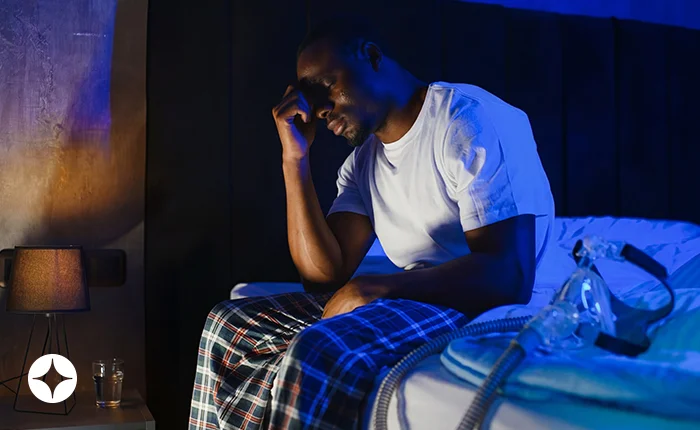
Whether you’ve been using a CPAP machine for years or just started therapy, staying comfortable and effective with your device can require ongoing attention. While new users often experience obvious challenges during the first few nights, even experienced users can encounter issues that impact comfort, therapy quality, and overall sleep. Here’s a guide to 12 of the most common CPAP challenges—and practical solutions for both new and seasoned users.
1. Trouble Adjusting or Re-Adjusting to CPAP
For new users, getting used to a mask and pressure settings takes time. For established users, comfort drift can occur as masks wear, facial contours change, or sleep patterns shift.1
Fix: Start by gradually increasing nightly use if you’re a new user. Long-term users should evaluate mask fit and cushion condition, and consider different mask styles if old preferences no longer feel comfortable.
2. CPAP Mask Leaks
CPAP mask leaks reduce therapy effectiveness and can irritate the eyes. While leaks are a common beginner problem, long-term users often see leaks develop as cushions degrade or straps stretch.
Fix:
- Check mask size and fit regularly
- Replace worn cushions or headgear
- Adjust straps evenly
- Try a different mask style if necessary
3. Dry Mouth from CPAP
Dry mouth can occur in new users who are still adjusting to airflow, but seasoned users may experience it as pressure or humidification needs change.
Fix:
- Use a heated humidifier or adjust humidity settings
- Consider a chin strap for mouth breathers
4. Difficulty Exhaling
Some users experience resistance when exhaling, especially with higher pressure settings.
Fix:
- Activate pressure relief features on your machine if available
- Consult your sleep specialist for pressure adjustments
5. Skin Irritation or Red Marks from CPAP Mask
Mask pressure on the skin can cause irritation. While beginners may tighten masks too much, established users can develop new pressure points due to subtle facial changes or cushion breakdown.
Fix:
- Loosen straps slightly
- Try mask liners to reduce friction
- Replace worn cushions on schedule
6. CPAP Rainout (Condensation in Hose)
CPAP rainout can happen anytime, but seasonal temperature changes and long-term hose use make this more common for experienced users.
Fix:
- Use a heated hose or hose cover
- Ensure the machine is positioned slightly lower than your head
- Adjust humidifier settings for seasonal changes
7. Claustrophobia or CPAP Mask Discomfort
Even long-term CPAP users may occasionally feel claustrophobic, especially if switching to a new mask or style.2
Fix:
- Consider minimalist masks like nasal pillows
- Practice wearing masks during the day to acclimate
8. CPAP Noise Issues
While modern CPAP machines are quiet, leaks or old equipment can generate additional noise over time.
Fix:
- Inspect for leaks
- Ensure filters are clean
- Place the unit on a stable, padded surface
9. Removing the CPAP Mask During Sleep
Occasionally removing the mask during sleep is normal for beginners adjusting to therapy, but long-term users may notice this as a sign of mask discomfort or improper pressure.
Fix:
- Refit mask to improve seal
- Check for leaks or pressure issues
- Ensure equipment is clean and comfortable
10. Stuffy or Runny Nose from CPAP
Airflow can dry out nasal passages, causing congestion and it can worsen over time with environmental changes.
Fix:
- Use a humidifier or saline spray before bed
- Adjust environmental humidity
- Ensure you wash your CPAP to remove bacteria
11. Aerophagia (Swallowing Air)
This can lead to bloating or discomfort, often when pressure settings are higher or if long-term users have changed their sleeping position.
Fix:
- Consult your provider to adjust pressure
- Consider gradual changes to therapy settings
12. CPAP Equipment Hygiene and Maintenance
Long-term users may be more aware of hygiene, but over time, equipment can accumulate moisture and bacterial buildup, subtly affecting comfort and sleep quality.3
Fix:
- Follow a regular maintenance schedule for all CPAP components
- Consider using devices designed to reduce bacterial buildup in hoses and masks
- Regularly inspect and replace supplies per manufacturer recommendations
CPAP therapy is a long-term commitment, and challenges can evolve over time. While new users must adapt to equipment and airflow, established users often face comfort drift due to mask wear, body changes, or environmental factors. By proactively monitoring fit, adjusting equipment, maintaining hygiene, and following replacement schedules, both new and experienced users can ensure consistent comfort and therapy effectiveness—night after night.
References
- Sleep Foundation, Common CPAP Side Effects and Solutions
- Mayo Clinic, CPAP Machines: Tips for Avoiding 10 Common Problems
- SoClean, Sleep Apnea Patients: Can a Dirty CPAP Make You Sick?