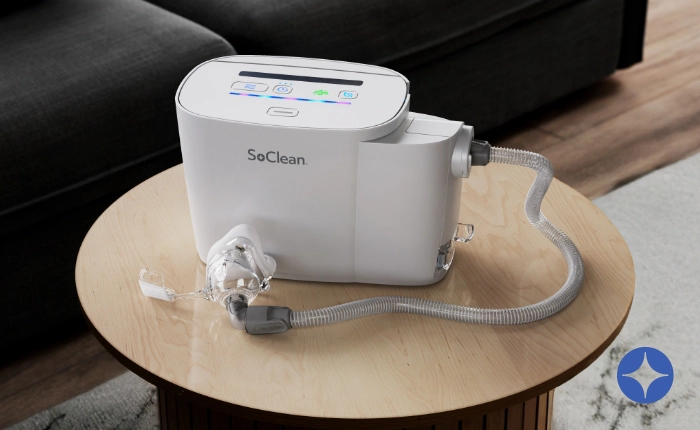
Consistent CPAP equipment care plays an important role in therapy success. CPAP manufacturers emphasize regular manual maintenance to manage moisture and physical buildup, while sleep experts continue to highlight routine and adherence as key factors in long-term therapy use.1,2 The challenge for many users is finding a care routine that is both effective and realistic.
For most people, a morning-based routine is the easiest way to stay consistent—especially when combining daily manual steps with hands-free support like SoClean 3+.
Why Morning Is the Best Time for CPAP Care
CPAP equipment is exposed overnight to airflow, warmth, and moisture. If care is rushed or skipped, these conditions can contribute to bacterial presence and equipment wear over time.3 Morning routines work well because:
- Equipment is already disconnected after sleep
- There is ample time before bed for components to air-dry
- Users are less likely to forget steps compared to bedtime
This timing aligns well with manufacturer recommendations and real-life schedules.
Daily CPAP Care: A Simple Morning Routine
This routine follows manufacturer guidance for manual care while incorporating SoClean 3+ as a supportive, hands-free step.
Step 1: Disconnect your equipment
After waking, disconnect the mask and hose from your CPAP device.
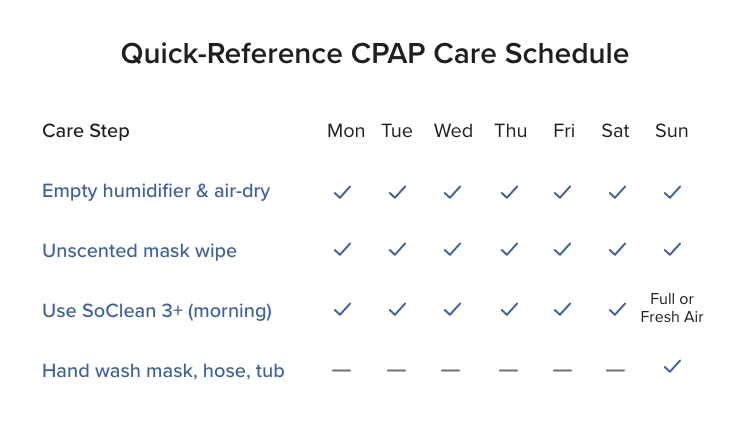
Step 2: Complete daily manual steps
Most manufacturers recommend regular attention to moisture management and inspection.1,4
- Empty the humidifier tub (if used)
- Rinse the tub with warm water if needed
- Allow the tub to air-dry
- Visually inspect the mask and hose for moisture, residue, or wear
- Use an unscented CPAP mask wipe to remove facial oils and residue from the mask cushion. Daily wiping can help maintain a proper seal and reduce buildup between weekly washes.
These steps help prevent moisture buildup and allow users to catch issues early.
Step 3: Use SoClean 3+
- Connect the mask to the hose
- Connect the hose to SoClean 3+
- Place the mask in the chamber
- Close the lid and press start
- Allow the full cycle to run (approximately 90 minutes)
SoClean 3+ reduces 99.9% of bacteria* in CPAP hoses and masks** and is typically used in the morning, when the full cycle can run without interrupting evening activities.
Step 4: Reconnect for nighttime use
Once the cycle is complete, open the lid to remove the mask, disconnect the hose from SoClean 3+ and reconnect it to your CPAP device so it's ready for use that evening.
Weekly Hand Washing: How SoClean 3+ Fits In
Manual hand washing remains essential and should be performed as recommended by the CPAP manufacturer—typically once per week.1,4
On your weekly wash day:
- Wash the mask, hose, and humidifier tub with mild soap and warm water
- Rinse thoroughly
- Allow all components to air-dry completely
Two Options After Weekly Washing
Once components are fully dry, SoClean 3+ can be used as part of returning equipment to regular daily use:
- Full cycle (preferred when time allows): Run SoClean 3+ as you normally would.
- Fresh Air cycle (faster option): If time is limited, the Fresh Air cycle allows air to circulate through the system and can be a convenient alternative on busy wash days.
Both options are designed to complement—not replace—manual washing, which remains the foundation of CPAP care.
Why This Routine Works
Research shows that simpler, more predictable routines improve adherence to CPAP therapy.2 By combining the below steps, users can reduce daily friction while staying aligned with manufacturer guidance.
- Daily manual moisture management
- Weekly hand washing
- Hands-free bacterial reduction with SoClean 3+
When equipment care feels manageable, consistency becomes easier—and consistency supports better sleep over time.
Get the latest status on SoClean 3+ release by subscribing to our email newsletter, or join the reservation list here.
Always wash your CPAP hose and mask according to the manufacturer's recommended method and interval.
References
- ResMed, How to Clean Your CPAP Equipment
- NCBI, CPAP Adherence Research (Weaver & Grunstein)
- NIH, Pseudomonas Unmasked: Poor Continuous Positive Airway Pressure (CPAP) Hygiene Leads to a Case of Pseudomonas Pneumonia
- AASM, AASM publishes clinical practice guideline on use of PAP therapy for sleep apnea