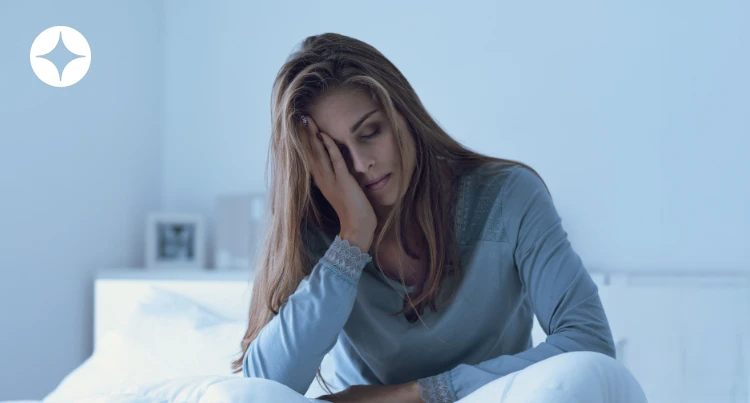
Beyond the AHI: How Sleep Apnea Can Present Differently in Women
Most of us associate Obstructive Sleep Apnea (OSA) with loud snoring, witnessed pauses in breathing, and daytime sleepiness — the classic symptoms that have shaped public awareness for decades. But research increasingly shows that OSA can present differently in women, and understanding these differences can help you better describe your symptoms and talk with your clinician.1,4
What "different" really means
Women with OSA often report symptoms that are less dramatic or more subtle than those typically described in men. For example, women may experience:
- Trouble falling asleep or staying asleep
- Fatigue and low energy rather than pronounced sleepiness
- Morning headaches and mood changes
- Impaired concentration or irritability
While snoring and breathing pauses can certainly occur, many women either snore more quietly or are less aware of those events, especially if they sleep alone. These subtler presentations can be valid signals of OSA, even if they don't fit the "textbook" picture many people imagine.1
A 2021 study that examined people with mild OSA found that women were more likely than men to report disturbed sleep and excessive daytime sleepiness patterns, and that symptom clusters differed significantly between sexes. This highlights that female patients may express their OSA experience in ways that standard symptom lists don't always emphasize.2
What sleep studies show
When researchers look at sleep study data, there are measurable differences between men and women with OSA. For example, one large study found that women tended to have more breathing disruptions during REM sleep, a stage associated with dreaming, while men had more events overall and greater desaturation. Women also tended to be older at diagnosis in that sample.3
These kinds of differences are important because standard measures like the apnea-hypopnea index (AHI) — how many breathing pauses occur per hour — were originally developed based on studies with more men than women. This means the same score could look somewhat different in context depending on the person's sex and sleep architecture.
How screening tools perform
Questionnaires such as STOP-Bang and the Epworth Sleepiness Scale are widely used to estimate OSA risk in clinical settings before referring someone for a sleep study. However, research suggests that these tools may perform differently in women than in men.
A narrative review of research on sex and gender differences in sleep-disordered breathing found that women with OSA were less likely to show abnormal scores on the Epworth Sleepiness Scale than men, even when they had similar levels of disease. It also noted that questionnaires like STOP-Bang and NoSAS may have lower sensitivity in women unless thresholds or scoring are adapted.4
This isn't to say the tools are "wrong," but that clinicians may interpret them differently depending on the context and patient characteristics, and there is ongoing research into how to improve performance across sexes.
What it means for you
If you're a woman who has had symptoms like fatigue, sleep fragmentation, or mood and concentration issues, it's worth knowing that these can be part of an OSA picture, even without dramatic snoring. Standard screening scores might not fully capture your risk, so describing your sleep experience in detail and asking about sleep studies if symptoms persist can be a helpful next step.
Remember, every individual is unique: many men also have subtler symptoms, and many women have classic snoring and apneas. The goal is simply to give you a broader vocabulary to describe your experience and work with your clinician to evaluate it.
References
- Sleep Foundation, Sleep Apnea Symptoms in Women
- PubMed, Sex Differences Exist in Symptom Profiles of Mild OSA
- Science Direct, Sex Differences in Polysomnographic Findings in Patients with Obstructive Sleep Apnea
- MDPI, A Narrative Review of Sex and Gender Differences in Sleep Disordered Breathing: Gaps and Opportunities