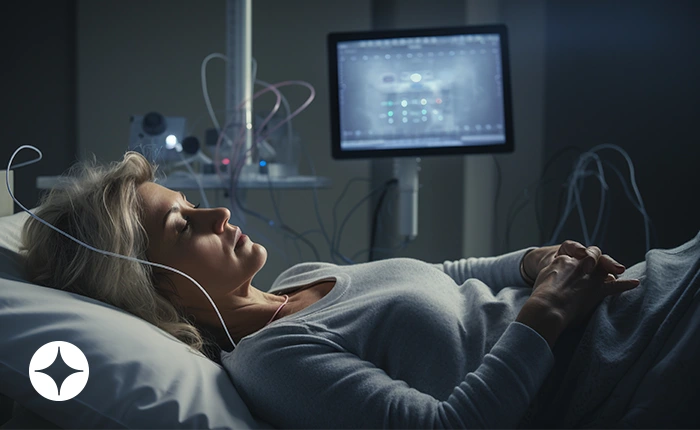
If you're using CPAP today, chances are your journey started with a sleep study—and likely a few doubts along the way. Many people approach sleep testing with hesitation, shaped by misconceptions about what the study involves or whether it's truly necessary. Looking back, many CPAP users recognize that those assumptions did not align with the clinical reality.
Understanding the most common misconceptions can help reinforce confidence in your diagnosis—and help you support loved ones who may still be unsure about taking that first step.
Misconception #1: "I won't sleep normally, so the results won't be accurate"
This is one of the most common concerns. In clinical practice, sleep specialists do not require a "perfect" night of sleep to diagnose obstructive sleep apnea (OSA). Clinical guidelines note that even just a few hours of sleep can provide sufficient information on breathing events, oxygen desaturation, and sleep architecture to support an accurate diagnosis using polysomnography or home sleep apnea testing, when appropriately indicated.1
For many CPAP users, diagnostic testing revealed clinically significant breathing disturbances that were not apparent based on symptoms alone.
Misconception #2: "Sleep studies are uncomfortable or invasive"
Sleep studies monitor breathing, oxygen levels, heart rate, and sleep stages using externally applied sensors. Standard polysomnography and home sleep apnea testing do not involve invasive procedures. These externally applied monitoring methods are designed to collect physiologic data while allowing patients to sleep in a natural position, either in a laboratory setting or at home, depending on the test type.2
Misconception #3: "I didn't feel that tired, so it couldn't have been serious"
Obstructive sleep apnea does not always present with marked daytime sleepiness. Population-based studies have shown that a substantial proportion of individuals with moderate to severe sleep-disordered breathing report little or no excessive daytime sleepiness, despite experiencing frequent nocturnal breathing disturbances.3
This disconnect between symptoms and disease severity demonstrates why subjective fatigue alone is not a reliable indicator of OSA and why objective sleep testing plays a critical role in diagnosis.
Misconception #4: "Home sleep tests aren't reliable"
Home sleep apnea testing (HSAT) is a clinically validated diagnostic option for appropriately selected patients. The American Academy of Sleep Medicine (AASM) recommends HSAT as an alternative to in-laboratory polysomnography for adults with a high pretest probability of moderate to severe OSA who do not have complicating medical conditions that could affect test accuracy.
Position statements and clinical studies show that HSAT can provide sufficient diagnostic information to guide treatment decisions, including initiation of CPAP therapy, when used according to established clinical criteria.2
Misconception #5: "Once you do a sleep study, CPAP is the only outcome"
A sleep study provides objective diagnostic information—it does not dictate a single treatment outcome. While continuous positive airway pressure (CPAP) is considered the first-line therapy for moderate to severe OSA due to its effectiveness in reducing apnea–hypopnea events, treatment decisions are based on disease severity, symptoms, and individual clinical factors.4
In this context, CPAP is not an overreaction but a response to objectively measured risk.
Why this still matters after diagnosis
For individuals already using CPAP, revisiting these misconceptions reinforces why therapy is worth continuing. Sleep studies identify a condition that has been consistently linked to cardiovascular disease, cerebrovascular disease, and cognitive decline when left untreated.3,4 Consistent CPAP use addresses the underlying mechanisms of OSA—including airway obstruction, intermittent hypoxia, and sleep fragmentation—helping reduce long-term health risks over time.
For loved ones who may still be hesitant about testing, sharing accurate information—and lived experience—can make a meaningful difference.
References
- JCSM, Clinical practice guideline for diagnostic testing for adult obstructive sleep apnea
- JCSM, Use of Actigraphy for the Evaluation of Sleep Disorders and Circadian Rhythm Sleep-Wake Disorders: An American Academy of Sleep Medicine Systematic Review, Meta-Analysis, and GRADE Assessment
- PubMed, Sleepiness in patients with moderate to severe sleep-disordered breathing
- JCSM, Treatment of adult obstructive sleep apnea with positive airway pressure